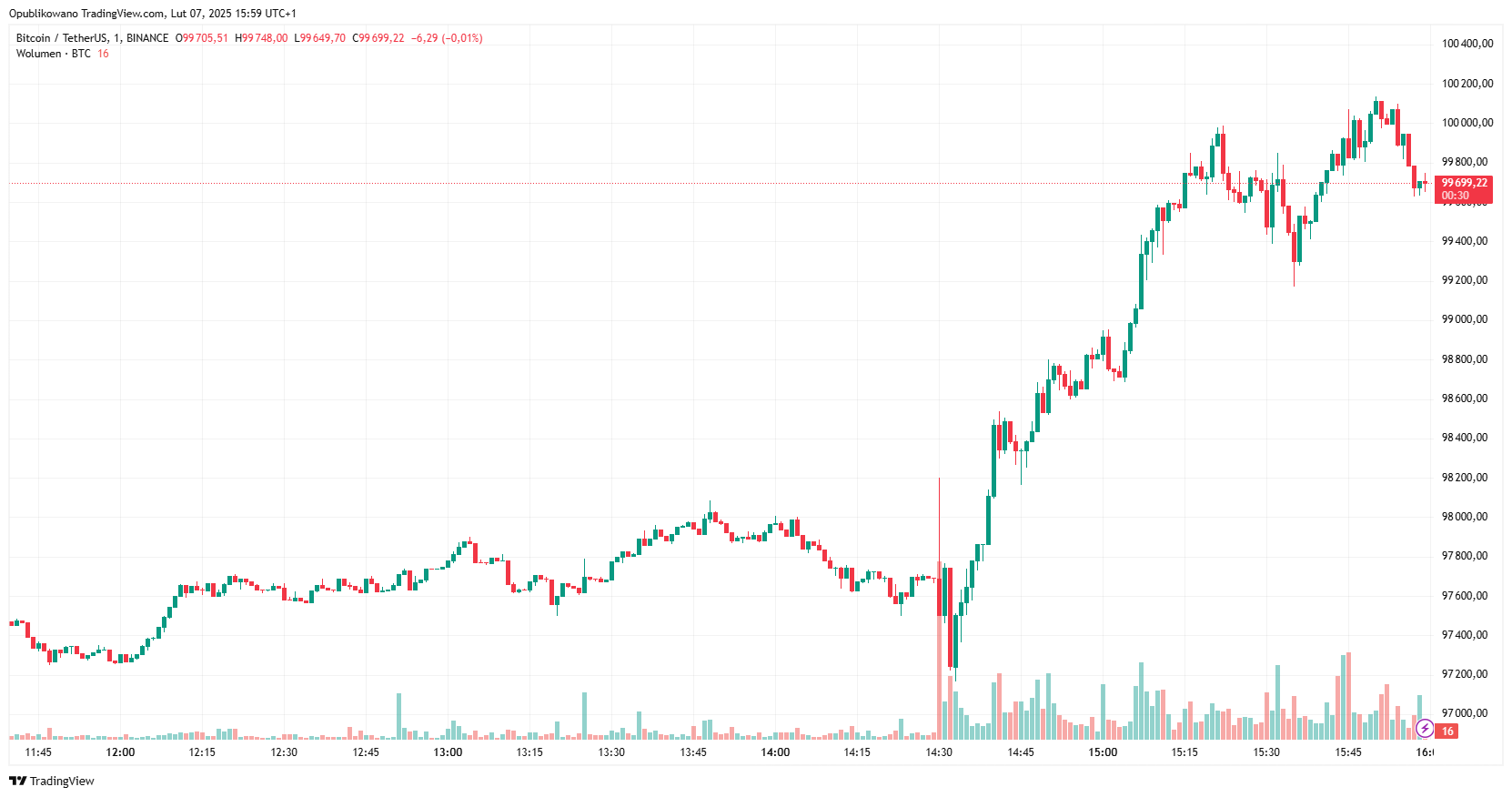
Bitcoin climbed close to $78,000 while Americans voted on Tuesday, then dropped more than $2,000 as the first results came in. CoinDesk put the low near $75,700 early Wednesday US time, before buyers lifted it back to about $76,700 in Asian morning trading. Over 24 hours, the move was almost flat. The politics behind it was anything but.
Democrats are projected to control both chambers of Congress next year. CoinDesk, writing at 11.55 p.m. Eastern on November 3, said the party flipped several Senate seats and even more House seats. Those are projections from US media outlets, not certified results: counting was still running in several states when the projections landed.
The Senate seats that changed hands
In Texas, James Talarico won with 59% of the vote on the latest count CoinDesk cited. In North Carolina, Roy Cooper won with nearly the same share. South Carolina picked Annie Andrews, Kansas picked Adam Hamilton, and Iowa picked Josh Turek. In Ohio, former senator Sherrod Brown won his way back to Washington even though the crypto industry spent $63 million trying to stop him, the industry's most expensive single-race effort.
Nebraska told a similar story at midnight: Fairshake spent almost $11 million on Pete Ricketts, who was trailing at the halfway mark of that state's count. In the House, Democrats flipped more than a dozen seats in the first hours after polls closed, and political analysts projected a margin that could pass 60 seats, far above the 218 needed for a majority. That 218 mark itself had not been reached when CoinDesk filed.
What changes for crypto
The market read it at once. S&P 500 futures fell 1.3%, wiping out an early 0.5% gain, and Nasdaq 100 futures dropped 2.3%. The 10-year US Treasury yield slid six basis points to 4.90%, and the MSCI Asia Pacific Index slipped nearly 2%. Among large crypto assets, ZEC bounced about 5% to roughly $1,200 after a 10% fall on Tuesday, while ether near $2,260 barely moved, SOL slipped about 1% to just under $92, and BNB lagged, down more than 1% to about $689.
The stakes go beyond one bill. Democrats who sat in this year's failed Digital Asset Market Clarity Act talks wanted tighter illicit-finance controls, limits on government officials taking part directly in the industry, and stronger consumer protections. Those positions are likely to harden now. Senator Elizabeth Warren is expected to chair the Senate Banking Committee that must sign off on crypto legislation, and Brown could gain a role over crypto matters even though his seniority was erased by his 2024 loss. In the House, Maxine Waters could return to lead the Financial Services Committee, while Republican chair French Hill held a narrow lead in Arkansas and Bryan Steil trailed by about 3% in Wisconsin.
We are not writing this as the end of the US crypto regulation story. Industry insiders quoted by CoinDesk still hope for progress on a crypto taxation bill, but hold little hope for a fresh market-structure effort. And one caution belongs with the numbers above: a projection is not a certification. Races were still being counted, and the final makeup of Congress can shift from Tuesday night's projections. Our CFTC stock-perps article is here. Our Tether reserve-gap article is here.
Sources: CoinDesk (Nov 3, 2026), USA Today (Nov 3, 2026), Associated Press (Nov 4, 2026). Figures and status are snapshots at writing time, midday November 4, 2026 WIB, and can change.
Written by Mastechon
Writing about crypto and Super Intelligence: market news, new projects, Super Intelligence models, and early opportunities like airdrops and testnets. Every piece starts from the official announcement, with the costs worked out up front.
Tether CEO Paolo Ardoino says the firm holds about 150,000 bitcoin worth $11.5 billion, but its third-quarter reserve report only implies about 100,060 coins.
The Liquid Federation said on November 3 its bitcoin reserves are fully restored, so every LBTC is backed 1:1 again, two months after a September flaw.
Arbitrum's Security Council moved 8,425 ETH and 74 million ARB from a Binance hack address without the attacker's key, by briefly swapping the Inbox code.
Binance's SAFU wallet now holds 7,500 BTC, about $580 million, after four October 31 transactions halved its balance. A refill is pledged, with no date.
ZachXBT flagged a suspected $106 million theft from an EU entity's accounts at exchanges. The funds left as stablecoins, then were swapped into ETH and Monero.
Chainalysis estimates $49 million stolen from Mercado Bitcoin across 17 chains, with nearly $10 million frozen. The exchange itself puts $38 million involved.
From November 3, Anthropic adds an invisible watermark to 4 older Claude models. It changes nothing you read, but two models carry it only at default settings.
Binance finished the zero-knowledge proof for its October 31 snapshot: 10 tokens are now user-verifiable at 1:1. What changed, and what it does not cover.
Brazil's exchange halted withdrawals after a November 2 security incident. Researchers flagged over $40M in suspicious transfers, unconfirmed by the exchange.
Meituan released LongCat-2.5 on November 2: a multimodal model for long coding work, scoring 88.4 on Terminal Bench. Its parameter count is still disputed.
US spot Bitcoin ETFs lost $643.3 million net on Friday, October 30, their largest since June 25. Ether funds lost $155.9 million, yet Bitcoin rose to $78,491.
Apple and Alibaba announced October 31: Qwen will power Apple Intelligence in China. Developer beta starts November 4; public release with iOS 27.3 in December.
Binance reopened withdrawals in phases on November 1; the first 9.5 hours saw a net outflow of $3.64 billion, 2.1% of reported assets. Flows are stabilizing.
A page-speed script from DebugBear on Polymarket's site was replaced with malicious code on October 29. It used signed-in traders' sessions to move positions, hit 726 wallets, and Polymarket refunded $3.9 million.
DeepSeek released its open-source Super-agent prototype on October 31: a coding agent that watches team chat and proposes fixes without being called. What shipped, its limits, and safe pilot conditions.
Google's prototype satellite answered its first prompt from orbit with a haiku from the Gemma 4 model. What it proves, its limits, and the twin-satellite plan for 2027.
Binance opened phase one withdrawals November 1 and says 95% of the $6.3B stolen is replaced. What changed since the midday schedule, and what is still pending.
Binance has set phase one of its withdrawal reopening for today, November 1, 06:00-09:00 UTC across 15 networks. Here is the schedule, Binance's own warning, and what is still unproven.
The FBI says North Korea was behind the October 29 theft from Binance and asks crypto firms to block hundreds of linked addresses, as most of the stolen funds are converted into ether.
Bitcoin staking platform b14g paused affected contracts after unauthorized withdrawals on October 31; about 68 million CORE is still traceable on the Core network and 9 million was frozen by exchanges, while staked BTC was unaffected.
ICE and Trade[XYZ] agreed to build a regulated perpetuals venue on Hyperliquid, HYPE jumped to near $90, but nobody has said whether fees from the US venue flow back to HYPE holders.
Two days after the $6.3 billion hack, Binance says 10 major assets are fully backed, the remaining 10% is still being sourced because those tokens are less liquid, and full reserve proof is due November 3.
Mistral opens a 1-trillion-parameter model to everyone, Google locks down its top-ranked model, Bitcoin steadies after the Binance hack, plus a free VPS and free Super Intelligence video that are still live.
A cross-checked roundup of what X is talking about: the largest hack in crypto history at Binance, Bitcoin's market reaction, trending coins, and this week's open airdrop claim windows.
What a crypto airdrop is, why projects give away free tokens, the requirements they usually ask for, and the realistic outcomes to know before you start.
Testnets use fake money, but your accounts and wallet are real. How to join testnets safely: a dedicated wallet, official faucets, and verification habits.