Baidu launches Apollo World to simulate robotaxi roads
2026-11-03 · 3 min read
Image source: Ilustrasi Mastechon
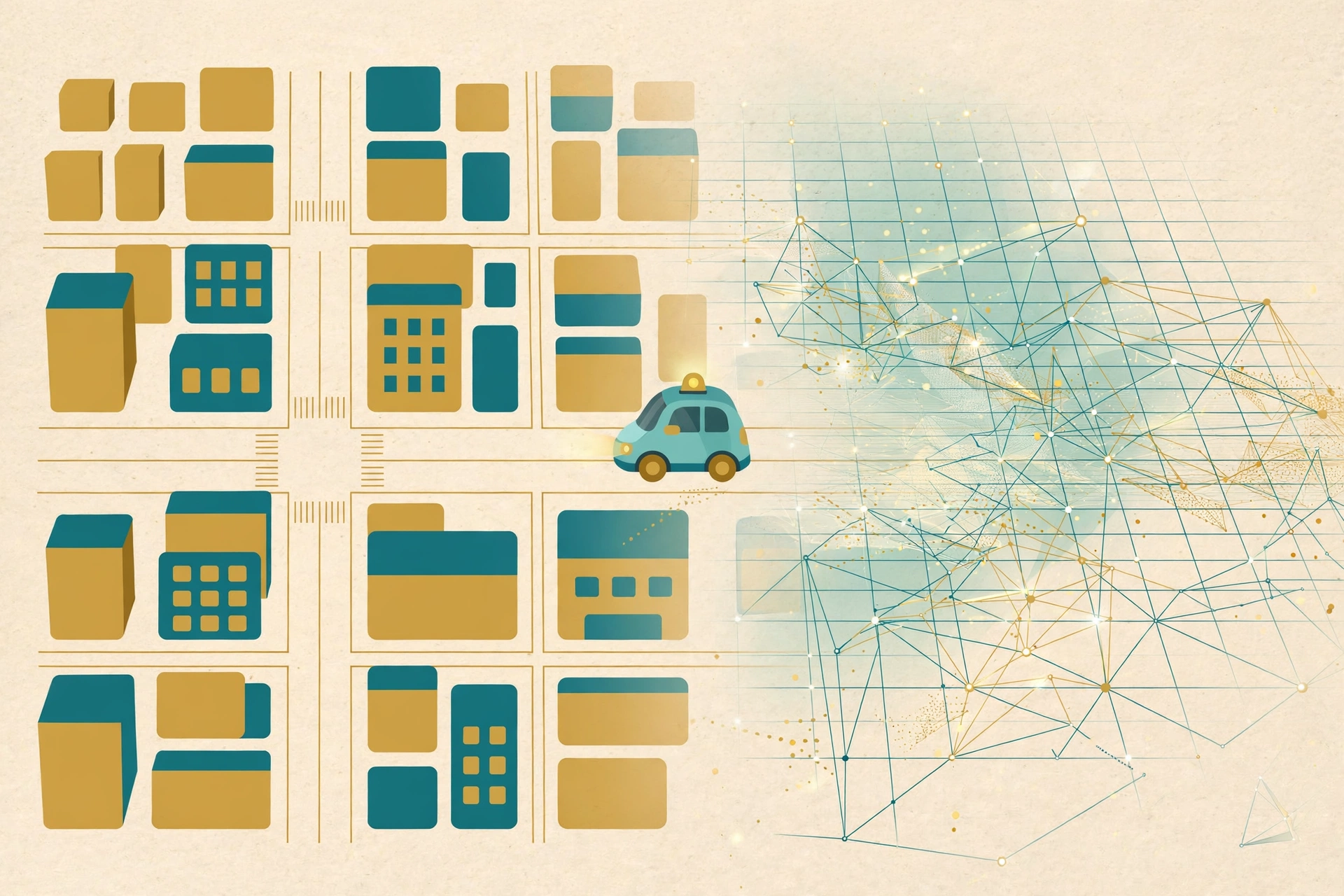
On Tuesday, November 3, Baidu launched Apollo World at its AI Day in Shenzhen. It is a world model for physical Super Intelligence: a system that builds a picture of how a road environment works, then predicts what happens next. The practical point is simple. Apollo Go robotaxis can practise inside the simulation, including situations the fleet rarely meets on real roads.
Baidu's headline number is easy to picture. Apollo World can generate up to 100,000 kilometres of simulated driving a day, which Baidu says equals about three years of real-world testing by one safety-driver vehicle. The system produces real-time multimodal data streams, such as camera and lidar observations, so a self-driving system can sense and navigate the simulated environment directly, rather than watch a recording of it.
Agents inside the simulation, not just scenery
What sets Apollo World apart from a digital map is how it treats the people and vehicles on the road. Vehicles and pedestrians inside the simulation act as agents: each one makes its own decisions and reacts to the others. So a robotaxi is not memorising one script. It is dealing with traffic that changes because other participants made choices. The foundation is real driving: Baidu says the model draws on more than 350 million kilometres of Apollo Go testing, then stretches that history into situations the fleet has never encountered.
Baidu also proposed a new way to grade world models, called the 2+3 standard. The reports we read do not spell out what the 2 and the 3 stand for, so we will not pretend to explain them. What the announcement does make clear is that Baidu wants a say in how this category is judged, not only in how it is built. The company also says the stack can extend to robotics and other physical Super Intelligence uses, though for now its first user remains Apollo Go.
Why simulation is a big bet
The context is cost. Building self-driving technology stays expensive, even though many Chinese robotaxi firms expand abroad asset-light, supplying technology and partnering with automakers and local fleet operators instead of owning every fleet outright. Reuters quotes mobility expert Frank McCleary making the point that launch speed comes down to how fast the technology adapts to a new environment. Simulation is Baidu's answer to that problem: more learning without adding vehicles and safety drivers at the same rate.
Apollo Go is already China's largest robotaxi operator and has been tested globally, competing with WeRide, Pony.ai, and Momenta Global. Morgan Stanley has estimated China's robotaxi fleet could reach 1 million vehicles by 2035, and XPeng, Volkswagen's Chinese partner, plans to start robotaxi operations in 2027. Those are a projection and a plan, not promises. What is real today is narrower: Baidu now trains its robotaxis in a world it built itself, and that world produces 100,000 kilometres of practice a day. Meituan's coding model for long jobs is in our LongCat article. The new test where even the best model scored only 12% is in our GDPx article.
Sources: Reuters (Nov 3, 2026), Crypto Briefing (Nov 3, 2026). Figures and status are snapshots at writing time, evening November 3, 2026 WIB, and can change.
Written by Mastechon
Writing about crypto and Super Intelligence: market news, new projects, Super Intelligence models, and early opportunities like airdrops and testnets. Every piece starts from the official announcement, with the costs worked out up front.
Binance's SAFU wallet now holds 7,500 BTC, about $580 million, after four October 31 transactions halved its balance. A refill is pledged, with no date.
ZachXBT flagged a suspected $106 million theft from an EU entity's accounts at exchanges. The funds left as stablecoins, then were swapped into ETH and Monero.
Chainalysis estimates $49 million stolen from Mercado Bitcoin across 17 chains, with nearly $10 million frozen. The exchange itself puts $38 million involved.
From November 3, Anthropic adds an invisible watermark to 4 older Claude models. It changes nothing you read, but two models carry it only at default settings.
Binance finished the zero-knowledge proof for its October 31 snapshot: 10 tokens are now user-verifiable at 1:1. What changed, and what it does not cover.
Brazil's exchange halted withdrawals after a November 2 security incident. Researchers flagged over $40M in suspicious transfers, unconfirmed by the exchange.
Meituan released LongCat-2.5 on November 2: a multimodal model for long coding work, scoring 88.4 on Terminal Bench. Its parameter count is still disputed.
US spot Bitcoin ETFs lost $643.3 million net on Friday, October 30, their largest since June 25. Ether funds lost $155.9 million, yet Bitcoin rose to $78,491.
Apple and Alibaba announced October 31: Qwen will power Apple Intelligence in China. Developer beta starts November 4; public release with iOS 27.3 in December.
Binance reopened withdrawals in phases on November 1; the first 9.5 hours saw a net outflow of $3.64 billion, 2.1% of reported assets. Flows are stabilizing.
A page-speed script from DebugBear on Polymarket's site was replaced with malicious code on October 29. It used signed-in traders' sessions to move positions, hit 726 wallets, and Polymarket refunded $3.9 million.
DeepSeek released its open-source Super-agent prototype on October 31: a coding agent that watches team chat and proposes fixes without being called. What shipped, its limits, and safe pilot conditions.
Google's prototype satellite answered its first prompt from orbit with a haiku from the Gemma 4 model. What it proves, its limits, and the twin-satellite plan for 2027.
Binance opened phase one withdrawals November 1 and says 95% of the $6.3B stolen is replaced. What changed since the midday schedule, and what is still pending.
Binance has set phase one of its withdrawal reopening for today, November 1, 06:00-09:00 UTC across 15 networks. Here is the schedule, Binance's own warning, and what is still unproven.
The FBI says North Korea was behind the October 29 theft from Binance and asks crypto firms to block hundreds of linked addresses, as most of the stolen funds are converted into ether.
Bitcoin staking platform b14g paused affected contracts after unauthorized withdrawals on October 31; about 68 million CORE is still traceable on the Core network and 9 million was frozen by exchanges, while staked BTC was unaffected.
ICE and Trade[XYZ] agreed to build a regulated perpetuals venue on Hyperliquid, HYPE jumped to near $90, but nobody has said whether fees from the US venue flow back to HYPE holders.
Two days after the $6.3 billion hack, Binance says 10 major assets are fully backed, the remaining 10% is still being sourced because those tokens are less liquid, and full reserve proof is due November 3.
Mistral opens a 1-trillion-parameter model to everyone, Google locks down its top-ranked model, Bitcoin steadies after the Binance hack, plus a free VPS and free Super Intelligence video that are still live.
A cross-checked roundup of what X is talking about: the largest hack in crypto history at Binance, Bitcoin's market reaction, trending coins, and this week's open airdrop claim windows.
What a crypto airdrop is, why projects give away free tokens, the requirements they usually ask for, and the realistic outcomes to know before you start.
Testnets use fake money, but your accounts and wallet are real. How to join testnets safely: a dedicated wallet, official faucets, and verification habits.