Fast Update

US Bitcoin ETFs lose $643 million in a day, most since June

2026-11-02 · 3 min read
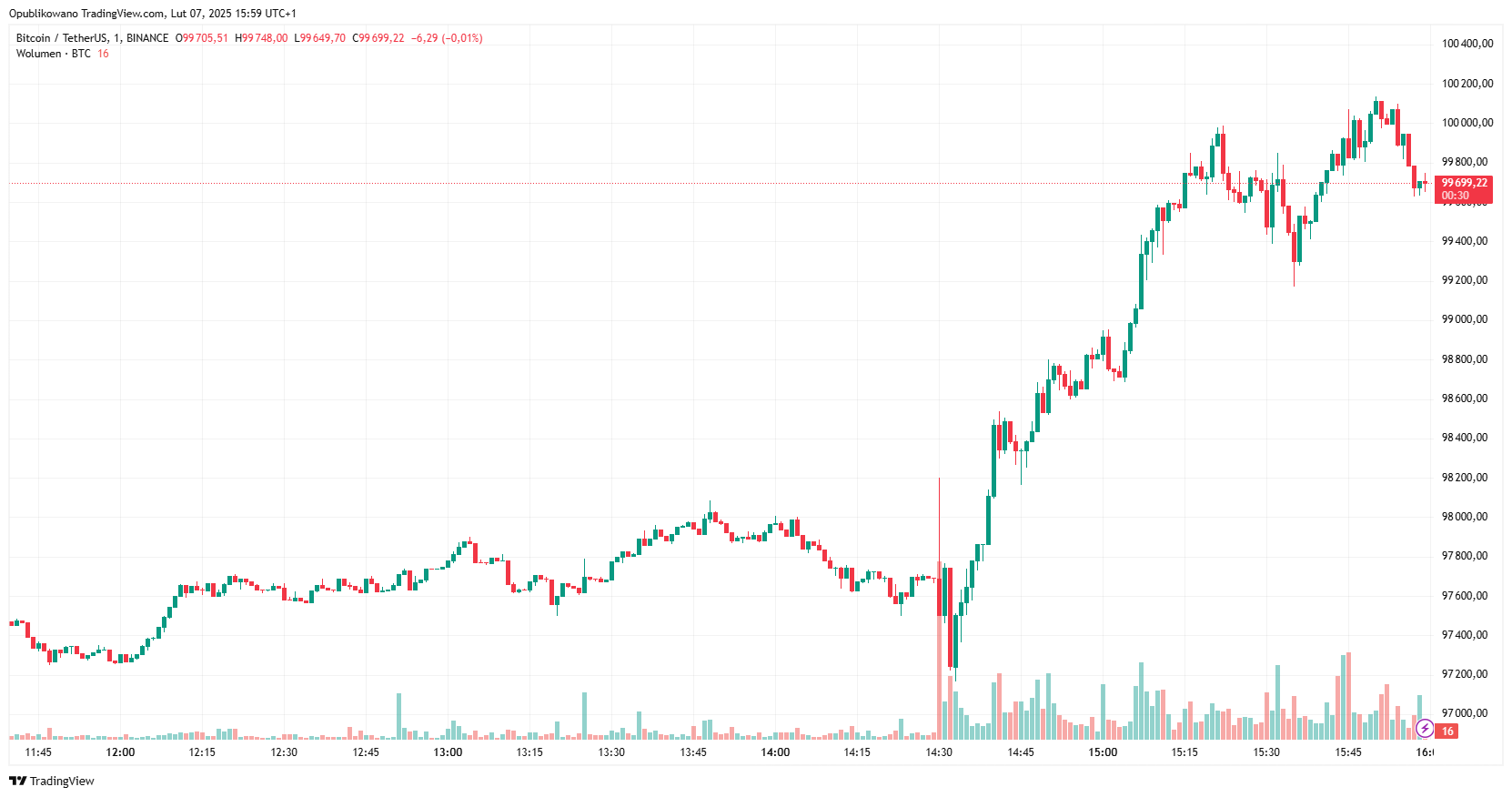
Bitcoin (BTC/USDT) price chart on a trading screen
Image source: SOS Gospodarka

Friday, October 30, was the first full US trading day after the Binance hack, and US spot Bitcoin ETFs recorded net outflows of $643.3 million that day. It was the largest single-day outflow since June 25, according to SoSoValue data cited by The Block on November 1. Spot Ether ETFs also lost $155.9 million the same day, their largest since October 7.

That is a large daily flow, and it is worth saying so plainly. The context matters too, because two analysts quoted by The Block read the day as risk reduction, not institutional panic.

Where the money left from

The fund-by-fund breakdown comes from Farside Investors. BlackRock's IBIT saw the largest outflow, $233.7 million, followed by Fidelity's FBTC at $201 million and ARK's ARKB at $129.5 million. Grayscale's GBTC lost $53.3 million and Bitwise's BITB $25.7 million.

The outflow also reversed four straight days of inflows worth about $440.8 million in total. For the week ending October 30, Bitcoin ETFs still recorded net outflows of $202.6 million, and Ether ETFs $431.5 million.

One revision is worth noting, so readers do not get confused by an older figure. Early reports on October 31 put the day at $409.5 million, before IBIT had reported. The final $643.3 million figure arrived once IBIT was included. The gap is not two different events, it is one day whose data was completed later.

Not an ETF bank run

Jeff Ko, chief analyst at ViaBTC, called the outflow more of a sentiment shock. His reason is concrete: spot ETF holders have no direct exposure to Binance, because the underlying Bitcoin sits with regulated custodians. Rick Maeda of Laevitas added the scale that calms the headline down: $643 million is under 1% of the $98.14 billion in total net assets held by spot Bitcoin ETFs.

Maeda described the day as de-risking, not capitulation and not a loss of institutional confidence. Prices backed that reading, at least for the moment. Bitcoin rose about 1% over 24 hours to $78,491 on Sunday night ET, and ether climbed 1.3% to $2,296, according to The Block's price page. The Fear & Greed Index stood at 37 on Sunday, still in fear territory.

What flow data cannot prove

Flow data records money entering and leaving funds, not each investor's reason. The sequence is clear, the hack on Thursday, the outflow on Friday, but sequence alone does not prove the hack drove every redemption. Some of it could be portfolio rebalancing or liquidity needs that happened to land on the same day.

The analysts quoted by The Block also do not promise a quick snap-back. Maeda pointed to the Bybit hack in the first quarter of 2025 as a precedent and expects stabilization or modest outflows in the near term, as long as the Binance hack stays contained at its current scale. Ko added that market attention is now shifting to the US midterm elections on November 3, because the balance of power in Congress could shape how crypto market structure legislation moves.

For readers following the Binance sequence from the start, the context is this: Binance reopened withdrawals on November 1, and the first 9.5 hours recorded $3.64 billion in net outflows, as in our article on that reopening. The full zk-SNARK reserve proof is still due on November 3. The FBI's attribution of the hack is in our FBI article.

Sources: The Block (Nov 1, 2026, SoSoValue data and Farside Investors data via VietnamPlus, Nov 1, 2026), CryptoCompass on the early-figure revision (Oct 31, 2026). Figures are snapshots at writing time, midday November 2, 2026 WIB, and can change.

Logo Mastechon
Written by Mastechon

Writing about crypto and Super Intelligence: market news, new projects, Super Intelligence models, and early opportunities like airdrops and testnets. Every piece starts from the official announcement, with the costs worked out up front.

← All articles

Related guides

Fast Update

Apple Intelligence arrives in China, powered by Qwen

Apple and Alibaba announced October 31: Qwen will power Apple Intelligence in China. Developer beta starts November 4; public release with iOS 27.3 in December.

Fast Update

Binance reopens, $3.64B leaves in 9.5 hours

Binance reopened withdrawals in phases on November 1; the first 9.5 hours saw a net outflow of $3.64 billion, 2.1% of reported assets. Flows are stabilizing.

Fast Update

Polymarket loses $2.7M to a hijacked third-party script

A page-speed script from DebugBear on Polymarket's site was replaced with malicious code on October 29. It used signed-in traders' sessions to move positions, hit 726 wallets, and Polymarket refunded $3.9 million.

Fast Update

DeepSeek open-sources Super-agent, a coding agent that works without being called

DeepSeek released its open-source Super-agent prototype on October 31: a coding agent that watches team chat and proposes fixes without being called. What shipped, its limits, and safe pilot conditions.

Fast Update

Google's satellite answers from orbit: the first haiku from a Super Intelligence chip

Google's prototype satellite answered its first prompt from orbit with a haiku from the Gemma 4 model. What it proves, its limits, and the twin-satellite plan for 2027.

Fast Update

Binance withdrawals are live in phase one as 95% of stolen funds are replaced

Binance opened phase one withdrawals November 1 and says 95% of the $6.3B stolen is replaced. What changed since the midday schedule, and what is still pending.

Fast Update

Binance reopens withdrawals in phases today, starting with 15 networks

Binance has set phase one of its withdrawal reopening for today, November 1, 06:00-09:00 UTC across 15 networks. Here is the schedule, Binance's own warning, and what is still unproven.

Fast Update

FBI blames North Korea for Binance's $6.3B hack; stolen funds moved into ether

The FBI says North Korea was behind the October 29 theft from Binance and asks crypto firms to block hundreds of linked addresses, as most of the stolen funds are converted into ether.

Fast Update

b14g loses 97 million CORE to unauthorized withdrawals; staking contracts paused

Bitcoin staking platform b14g paused affected contracts after unauthorized withdrawals on October 31; about 68 million CORE is still traceable on the Core network and 9 million was frozen by exchanges, while staked BTC was unaffected.

Fast Update

NYSE owner ICE brings Hyperliquid perps to the US; what HYPE holders get is still unclear

ICE and Trade[XYZ] agreed to build a regulated perpetuals venue on Hyperliquid, HYPE jumped to near $90, but nobody has said whether fees from the US venue flow back to HYPE holders.

Fast Update

Binance has replaced 90% of stolen funds; withdrawals reopen November 1

Two days after the $6.3 billion hack, Binance says 10 major assets are fully backed, the remaining 10% is still being sourced because those tokens are less liquid, and full reserve proof is due November 3.

Fast Update

October 31 Update: Super Intelligence's Access Fight, Bitcoin Holds $77K, and 3 Freebies Still Running

Mistral opens a 1-trillion-parameter model to everyone, Google locks down its top-ranked model, Bitcoin steadies after the Binance hack, plus a free VPS and free Super Intelligence video that are still live.

Market Update

Bitcoin Today: Binance's $6.3B Hack, BTC's Dip to $76K (Oct 31, 2026)

A cross-checked roundup of what X is talking about: the largest hack in crypto history at Binance, Bitcoin's market reaction, trending coins, and this week's open airdrop claim windows.

Beginner Guide

Crypto Airdrops for Beginners: How They Work, Requirements, and Reality

What a crypto airdrop is, why projects give away free tokens, the requirements they usually ask for, and the realistic outcomes to know before you start.

Testnet

How to Join Testnets Safely Without Risking Real Money

Testnets use fake money, but your accounts and wallet are real. How to join testnets safely: a dedicated wallet, official faucets, and verification habits.

Security

Anti-Scam Checklist Before Claiming Any Airdrop or Mint

Five two-minute checks before you connect your wallet to any claim or mint page: source, contract address, token approvals, costs, and time pressure.